Samuel Tunick was returning home from a vacation in the Dominican Republic on January 24, 2025, when a CBP Tactical Terrorism Response Team pulled him into a windowless room at Atlanta’s Hartsfield-Jackson airport and demanded his phone’s passcode. Agents told him they were searching for “child sexual abuse material” — a justification that, according to his lawyers, never surfaced again anywhere in the case, and which they call “a pretext for a fishing expedition into Mr. Tunick’s connections.” Tunick is an activist connected to the Defend the Atlanta Forest movement, which opposes construction of Atlanta’s controversial “Cop City” police training facility on environmental and anti-militarization grounds.
WHAT ACTUALLY HAPPENED TO THE PHONE
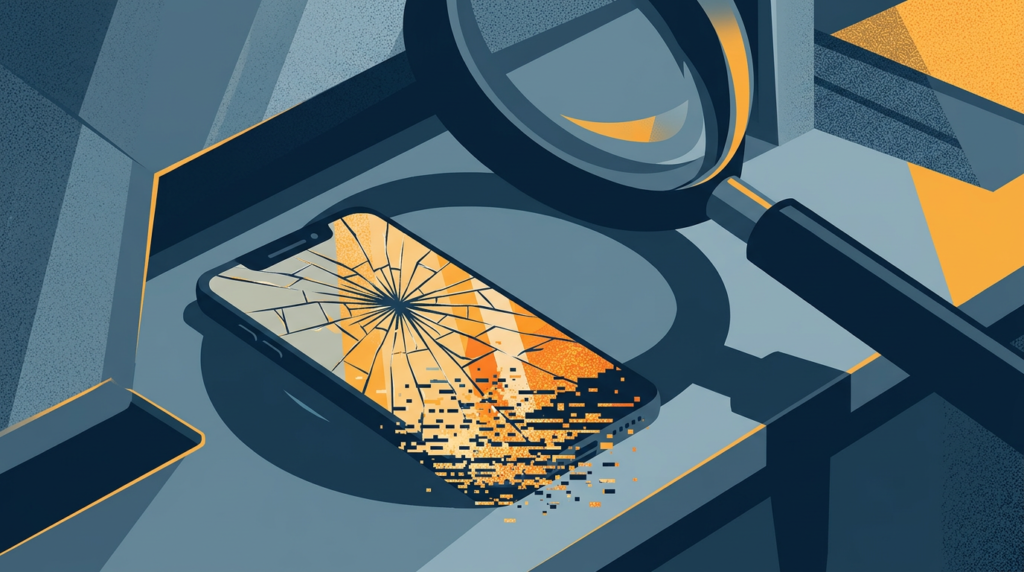
Tunick’s Google Pixel ran GrapheneOS, a privacy-focused operating system with a built-in security feature: a “duress PIN,” separate from the normal unlock code, that instantly and permanently wipes the device when entered. Prosecutors allege Tunick gave agents a passcode that triggered this wipe rather than unlocking the phone — erasing the data instead of handing it over.
Now he’s facing a federal felony charge under an obscure statute making it illegal to destroy or damage property specifically to prevent government seizure of it — the same category of law more commonly used against someone who burns evidence or smashes a hard drive during a criminal investigation, applied here to a man who used a legitimate, publicly documented security feature built into commercially available privacy software.
WHY THIS IS A GENUINE FIRST TEST CASE, NOT A ROUTINE PROSECUTION
Legal experts and privacy advocates describe this as uncharted legal territory. The border-search exception to the Fourth Amendment already gives CBP extraordinarily broad authority — agents can search travelers’ phones without a warrant, without probable cause, without individualized suspicion at all. What’s never been squarely tested is what happens on the other side of that equation: whether a traveler who uses a lawful, built-in privacy feature to protect their own data from that search has committed a separate federal crime by doing so.
Reason’s own analysis captures the deeper asymmetry here directly: courts have long allowed border agents to actively lie to travelers to get them to unlock a phone, while the government is now arguing that a traveler protecting their own data through entirely truthful, passive means — a passcode is still a passcode — constitutes felony obstruction. The ACLU and Electronic Frontier Foundation have both argued for years that modern smartphones hold such comprehensive records of a person’s entire life that they deserve stronger constitutional protection than a suitcase, not less.
THE STATE OF THE CASE
Tunick’s defense attorneys argue the entire border stop was unlawful and that evidence obtained through it should be suppressed. Magistrate Judge Christopher C. Bly held an evidentiary hearing on July 20; as of the most recent reporting, no ruling has been issued. Prosecutors dispute the defense’s characterization and maintain officers acted within their standard border-inspection authority. Tunick, as with anyone facing federal charges, remains presumed innocent unless the government proves the case beyond a reasonable doubt — worth stating plainly, since this is very much still an open legal fight, not a settled outcome.
WHY THIS MATTERS BEYOND ONE ACTIVIST’S PHONE
FindLaw’s own framing gets at exactly why this case carries weight well past Tunick himself: the ruling on his suppression motion will shape the legal ground for other activists and travelers whose politics or associations draw government attention at the border, not just this one prosecution. If protecting your own device with a lawful privacy feature can become a felony obstruction charge, that changes the practical calculus for anyone — journalist, protester, attorney, or ordinary traveler — who might reasonably want to keep sensitive personal or professional information out of a warrantless search they have no legal ability to refuse. That’s a genuinely significant expansion of government leverage over private data, built entirely on a theory a federal court hasn’t yet ruled on.