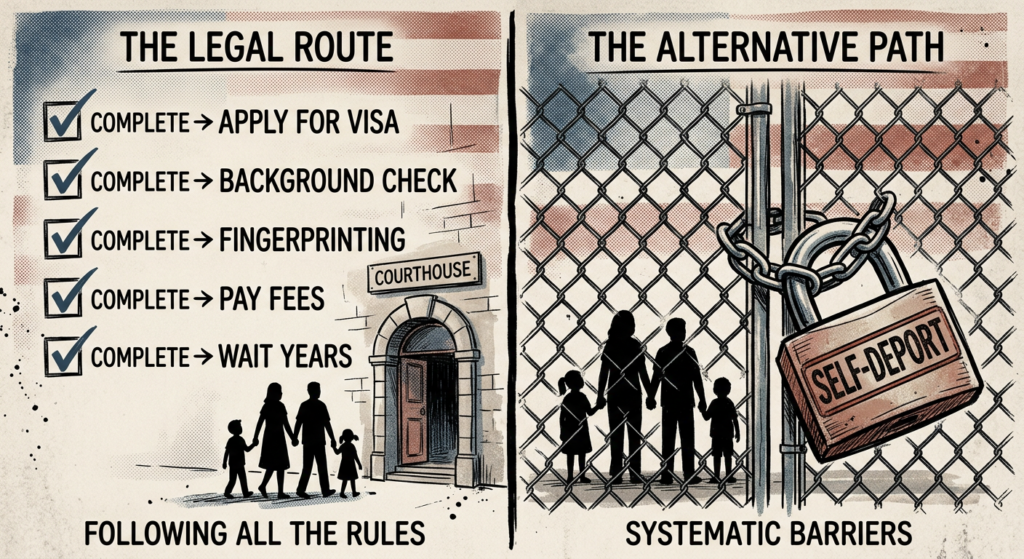
Here’s what “following the rules” actually looked like for one family, and here’s what it got them.
José, Carolina, and their teenage daughter fled Venezuela, scheduled an appointment through the CBP One app exactly the way the government told them to, met with a Customs and Border Protection agent, requested asylum, and were granted parole — legal permission to live and work in the U.S. while their case worked through the courts. They settled in Las Cruces, New Mexico. They showed up to their scheduled hearing in El Paso like they were supposed to. This is, by definition, doing it the “right way” — the phrase you hear thrown around by people demanding immigrants “get in line.” This family got in line.
The judge dismissed their case. And the moment they stepped out of that courtroom, ICE agents were waiting to arrest them. Not because they’d broken a law. Not because they’d missed a hearing. Because the Trump administration had unilaterally terminated the legal status of more than 900,000 people who’d entered exactly the way this family did — retroactively criminalizing a process the government itself had built and told them to use. When José asked the agent transporting him to Dilley why he was being detained if he hadn’t entered illegally, the answer he got back was: “I can’t tell you anything else, other than I’m here to deport you.” That’s not law enforcement. That’s a shrug wearing a badge.
They spent a month inside the South Texas Family Residential Center in Dilley — a facility advocacy groups have documented for “inhumane conditions, routine mistreatment, and due process violations” for years. Lights on all night. Blue jumpsuits. Carolina and their daughter in one wing, José separated into another. Boiled eggs and oatmeal at 7 a.m. And this was the version of the story with a comparatively survivable ending — other Venezuelan families held at the very same Dilley facility were, this July, put on a deportation flight toward Venezuela in the immediate aftermath of a deadly earthquake, and only rerouted after Rep. Joaquin Castro publicly intervened. More than 100 immigrants had already been sent back to Venezuela hours before that earthquake hit — most of them now assumed dead.
José’s family made it out alive, but only by giving up. After a month of detention, watching their 14-year-old daughter spiral into depression and start vomiting from the stress, they did what the system apparently wanted all along: they bought one-way tickets and self-deported back to the country they’d risked everything to leave. Weeks later, a federal judge ruled that the government’s mass termination of CBP One parole status was unlawful in the first place. The ruling came too late to matter to this family. It always does.
So let’s be exact about what happened here, because vague language lets this slide. A family used the legal process. The government changed the rules retroactively and arrested them for it. They were detained in a facility with a documented record of mistreating children. And when they finally broke and left the country voluntarily, that outcome gets filed by this administration as a win — a self-deportation, a statistic, proof the policy is “working.” It isn’t a win. It’s a family being terrorized into leaving after doing everything asked of them, and calling the wreckage a policy success.