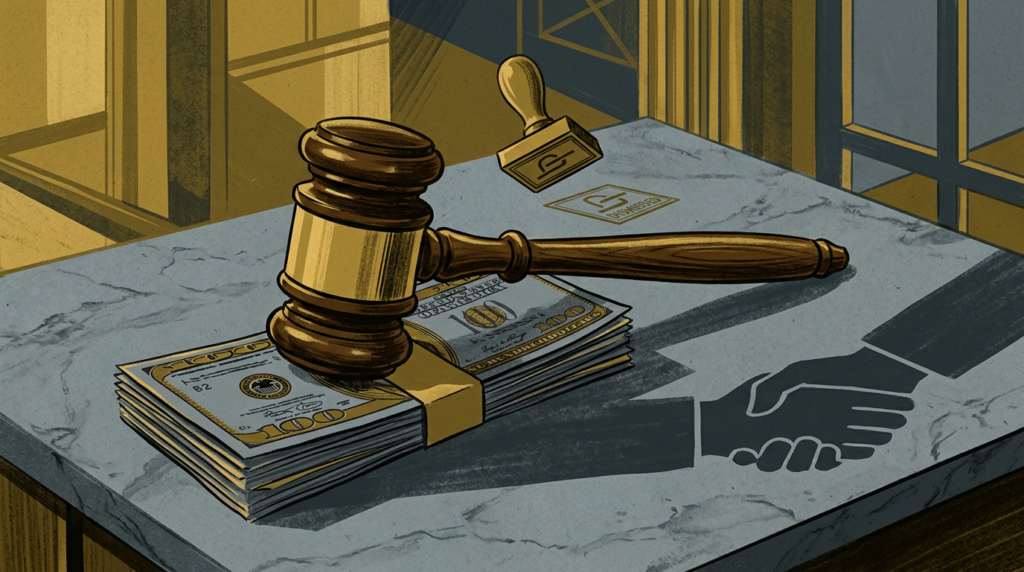
In November 2024, the Justice Department unsealed a five-count indictment against Gautam Adani — India’s richest man, worth roughly $104 billion — his nephew Sagar Adani, and Adani Green Energy CEO Vneet Jaain. The allegations: a bribery scheme worth more than $250 million to secure Indian solar energy contracts projected to yield $2 billion in long-term profits, concealed from American investors during a $750 million bond offering. The DOJ later expanded the case to eight total defendants, adding charges of conspiracy to obstruct investigations by deleting evidence and withholding information during government inquiries.
THE $10 BILLION PLEDGE THAT SHOWED UP RIGHT BEFORE THE CASE DIED
This past May, Adani publicly pledged $10 billion in U.S. investment. Days later, Trump’s DOJ moved to drop the entire indictment with prejudice — meaning it can never be refiled. The one-paragraph motion, filed by Principal Associate Deputy Attorney General R. Trent McCotter, offered essentially no reasoning: the Department had decided “not to devote further resources” to the case.
That thin justification, combined with the timing, is what triggered the actual scandal here. Reports surfaced that the dismissal followed Adani’s investment pledge, and that Adani’s own attorney — Robert Giuffra, who also personally represents President Trump — raised the investment directly during settlement talks with prosecutors. That overlap is not a minor detail. The same lawyer representing the president in his own legal matters was simultaneously negotiating a case dismissal for a foreign billionaire, using a pledge of billions in U.S. investment as apparent leverage.
THE JUDGE MADE THEM EXPLAIN THEMSELVES — AND STILL SOUNDED UNCONVINCED
U.S. District Judge Nicholas Garaufis didn’t simply rubber-stamp the dismissal. He ordered the government to explain itself, triggering a months-long back-and-forth. Sworn statements from Giuffra, Adani, McCotter, and the current U.S. Attorney for the Eastern District all maintained the investment pledge played no role in the decision. The court ultimately accepted those assurances on August 10 and dismissed the case with prejudice — but Judge Garaufis’s own order didn’t hide his unease about how the case had been handled.
Here’s the detail that should get more attention than it has: the judge specifically found that the DOJ’s own stated legal basis for dropping the case actually cut against dismissal. The Department leaned on what’s called the Blanche Memorandum — a Trump administration policy document that reoriented FCPA enforcement toward conduct threatening national security or American businesses. Garaufis noted the alleged bribes here were tied directly to energy infrastructure, which the Blanche Memorandum itself flags as a priority area. In other words: the DOJ cited a policy meant to justify continuing to pursue exactly this kind of case, and used it instead to justify walking away from it.
Three of the eight original defendants — Gautam Adani, Sagar Adani, and Vneet Jaain — appeared through counsel and consented to the dismissal. The remaining five, who face separate bribery and obstruction charges, have never appeared in the case at all and are believed to be living abroad, meaning the underlying obstruction allegations were never actually resolved on the merits — they simply became unenforceable against defendants the U.S. can’t reach.
THE PATTERN THIS FITS
This is part of a much broader retreat: an executive order Trump signed in February 2025 paused FCPA enforcement broadly, citing concerns about U.S. competitiveness, and it’s already led to the dismissal of other major foreign bribery cases beyond Adani’s. Six Republican congressmen wrote to then-AG Pam Bondi specifically arguing the Adani prosecution should be dropped because it “jeopardises the relationship with close ally India.” Sen. Elizabeth Warren’s own formal letter to the DOJ — sent before the dismissal, now looking prescient — flagged that Adani had been “involved in a wide-ranging bribery scandal” and warned against exactly the outcome that followed.
MS NOW’s coverage lands the sharpest point cleanly: this is happening in the same administration where JD Vance, chairing a White House anti-fraud task force, told Fox News, “If you are committing fraud against the American people, all of us in public leadership should be trying to stop it and throw you in prison” — while the same administration’s Justice Department is simultaneously dropping fraud prosecutions against a $104 billion foreign billionaire whose own lawyer shares a client list with the president, and pardoning domestic Medicare fraudsters worth nearly $2 billion combined, a story already covered in this newsletter.
THE THROUGH-LINE
A bribery case worth $250 million in alleged corrupt payments and $2 billion in projected illicit profit. A defendant who pledged $10 billion in U.S. investment right before the case collapsed. A shared attorney between that defendant and the sitting president. A federal judge who accepted the government’s sworn denials of a connection while pointedly noting the DOJ’s own stated legal rationale actually argued against the outcome it produced. This is what “prosecutorial discretion” looks like when the discretion consistently seems to run in the direction of whoever has the most money and the closest access to the president’s own legal circle.