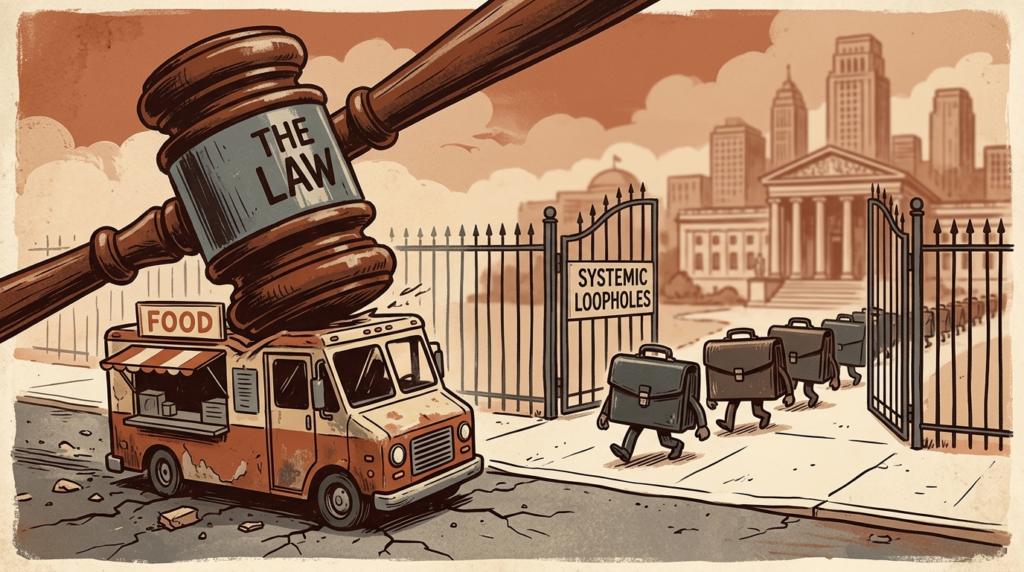
Esmeralda Soriano runs a small fruits-and-vegetables food truck in Santa Ana, operating under the names Soriano Produce and, according to the indictment, two aliases. Federal prosecutors allege her truck was the highest-redeeming SNAP benefits vendor among comparable stores within a 20-mile radius — a total volume of roughly $640,924, more than six times her nearest competitor, with an average transaction of $151.41. Compared to full-size grocery stores within five miles, her truck still out-redeemed them despite nearly 9,700 fewer total transactions. That statistical pattern is the entire basis of the fraud case: unusually high SNAP redemption relative to transaction volume, the kind of red flag that trafficking-detection algorithms are built to catch.
She’s now indicted on two counts of illegal SNAP benefit trafficking, facing a maximum of 20 years in prison and a $250,000 fine. She’s out on a $5,000 bond. This case is part of a broader federal sweep — “Operation Traffic Jam” — with the USDA’s Office of Inspector General issuing 33 separate charge letters to Southern California retailers this year alone, run through the DOJ’s newly created National Fraud Enforcement Division, which describes itself as “laser-focused on investigating and prosecuting those who commit fraud against the American people.”
NOW COMPARE THAT TO WHO ACTUALLY GOT PARDONED
This newsletter has already documented, in detail, exactly what “laser-focused” fraud enforcement looks like when the defendant is wealthy and well-connected instead. At least 15 clemency grants in Trump’s second term alone have gone to healthcare executives, doctors, and pharmacists who collectively defrauded more than $3 billion from Medicare and Medicaid combined:
- Philip Esformes — the largest healthcare fraud case in U.S. history at the time, $1.3 billion, sentence effectively ended after 4.5 years of a 20-year term.
- Lawrence Duran — a $205 million scheme, 50-year sentence commuted, with Trump’s own clemency order specifying he’d owe “no further fines [or] restitution” on the $87 million he was ordered to repay victims.
- Joseph Schwartz — a nursing home operator tied to Medicaid abuse across roughly 95 facilities, pardoned three months into a three-year sentence, after paying lobbyists over $1 million to secure it.
Across both terms combined, independent review estimates Trump has erased nearly $2 billion in restitution and victim-repayment obligations for people convicted of healthcare fraud at a scale that dwarfs, by a factor of thousands, the amount a food truck owner is now facing two decades in prison over.
THE ENFORCEMENT PRIORITY GAP, STATED PLAINLY
Los Angeles’ top federal prosecutor, Bill Essayli, told reporters covering these SNAP cases: “These programs are administered by the state, and the state have not done a good enough job to weed out the fraudsters.” That’s a real statement of enforcement priority from a sitting U.S. Attorney — go after state-administered nutrition assistance fraud aggressively, publicly, with a dedicated new federal division built for exactly this purpose. Meanwhile, this newsletter’s earlier reporting already documented a career federal prosecutor, Will Rosenzweig, fired within three hours of a years-old blog surfacing, while he was two weeks from trial against actual Medicare fraud defendants — a case his own colleagues warned might get dropped entirely without him.
THE THROUGH-LINE
A single food truck owner facing 20 years and a quarter-million-dollar fine over roughly $640,000 in disputed SNAP transactions. A parade of healthcare executives who stole thousands of times that amount, walking free with their restitution obligations personally erased by presidential order. Both categories involve real allegations of defrauding taxpayer-funded programs. Only one of them gets the label “laser-focused” federal prosecution. The other gets a pardon, a pen, and — in at least one documented case — a $1 million lobbying invoice that apparently bought exactly what it was meant to buy.