Here’s what’s documented, in a federal court record, not a rumor: FBI agents interviewed a woman four times in 2019 about allegations that Jeffrey Epstein introduced her to Donald Trump when she was between 13 and 15 years old, and that Trump sexually assaulted her during that encounter. The Bureau found her credible enough to interview repeatedly. The interviews were memorialized in FBI 302 reports — the standard form agents use to record what a witness told them.
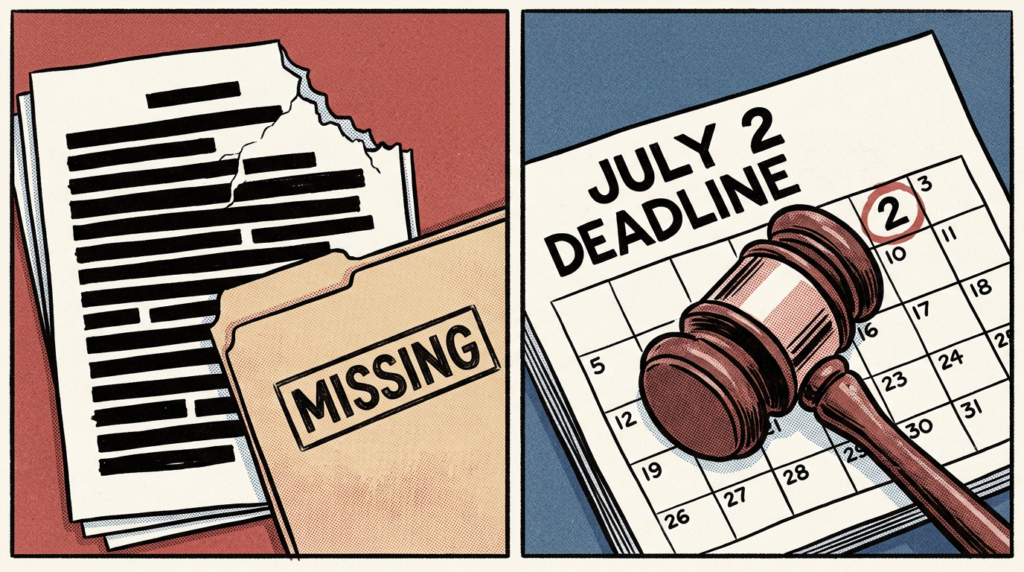
And then those records started disappearing. In February 2026, investigative journalist Roger Sollenberger discovered that a DOJ case index document listing at least four interviews with this woman had been quietly pulled from the department’s own public Epstein files site. CNN’s own review of the archive independently found the same three memos missing from what was supposed to be a complete public record. The DOJ’s excuse, when it eventually released three of the reports in March, was that they’d been withheld from the original release because officials believed them “duplicative” — an explanation that doesn’t square with journalists finding them actively removed after initially being posted.
Congress passed the Epstein Files Transparency Act in November 2025 by an overwhelming, bipartisan margin, specifically to force full disclosure — a law Trump himself spent months lobbying Republicans to vote against before it passed anyway. Even after that law took effect, dozens of pages connected to this woman’s interviews remained withheld or redacted. So in June, U.S. District Judge Emmet Sullivan ran out of patience. Ruling in a lawsuit brought by journalist Katie Phang, Sullivan ordered acting Attorney General Todd Blanche to release the remaining unredacted files or formally explain to the court why the DOJ should be allowed to keep them secret. The deadline was July 2. Sullivan’s own words, through Phang’s characterization: put up or shut up.
The White House’s response to all of this hasn’t been to explain the missing pages. It’s been to attack the accuser’s credibility by pointing out that the Biden administration also had these files for years and didn’t act on them — which, notably, is an argument about a different administration’s inaction, not a rebuttal of what the FBI’s own interview notes say. Trump denies the underlying allegation. He’s entitled to that defense in any legal proceeding. What he is not entitled to is a Justice Department he now controls deciding, unilaterally, which pages of a federally mandated disclosure the public gets to see.
That’s the actual story here, stripped of anything that requires you to take a side on guilt or innocence: a law passed nearly unanimously by Congress required full disclosure. Records the FBI itself found credible enough to compile started vanishing from the government’s own public archive. And it took a federal judge issuing an explicit ultimatum to get even partial compliance — with the fight over the rest still ongoing.