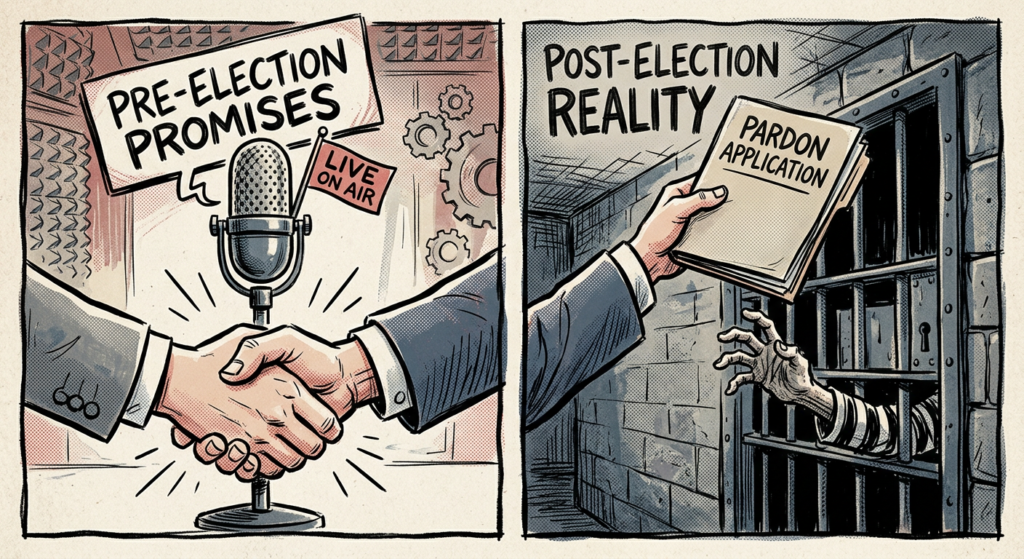
Michael Cohen spent years calling Donald Trump a “Cheeto-dusted cartoon villain.” He went to prison for three years starting in 2018 for campaign finance violations tied directly to hush money payments he made at Trump’s direction — payments Trump himself was never criminally punished for in any comparable way, despite Cohen testifying under oath that Trump directed the whole scheme. Cohen said publicly, more than once, that he would never accept a pardon from a man he considered too corrupt to offer one honestly. That was the position. That was the record.
As of Thursday, all of that is being quietly retired. Cohen appeared on CNN and confirmed he’s submitted a pardon application to the Trump White House. Hours later, Trump appeared on Cohen’s own radio show for a friendly 15-minute preview segment, with Cohen calling him “boss” and the two men swapping notes on Iran, poll numbers, and gas prices like old colleagues. Cohen posted a Substack essay titled “The Impossible Reunion,” describing the two of them as having simply “forgiven” each other, and framing anyone skeptical of that as trapped in “captivity” to old grudges.
Here’s the part worth sitting with: this isn’t Cohen’s first rodeo asking Trump’s camp for a pardon, and it didn’t go well the last time either. Back in 2018, Cohen’s own lawyer raised the idea with Trump’s legal team within weeks of the FBI raid on Cohen’s home. Trump’s lawyers dismissed it. Rudy Giuliani left the door cracked open for later — and later never came. Cohen went to prison anyway, while the man he was protecting stayed out of one. He even asked Joe Biden for a pardon afterward and got turned down too. So the “forgiveness” narrative isn’t actually new information about who these two men are to each other — it’s the same transaction Cohen has been trying to close for eight years, dressed up this time in the language of reconciliation instead of legal necessity.
None of that requires guessing at anyone’s motives to say out loud, because Cohen has said it himself, repeatedly, on the record, in both directions. He said a pardon from Trump would be something he’d “never accept” because Trump acted “so corruptly as president.” Now he’s applied for one, calling the same man “boss.” Whatever produced that reversal, it wasn’t new evidence that Trump changed. It’s the oldest incentive in the book: Cohen has a felony record, and Trump has the pen.
And the pattern this administration has already established with people who serve a purpose and then become inconvenient doesn’t inspire much confidence that this ends differently. Cohen was disposable once already — sent to prison for carrying out a scheme while the man who directed it kept his freedom and, eventually, the presidency. There’s no reason baked into that history to assume loyalty gets repaid this time instead of spent.